Websites age quietly.
One day you launch something you’re proud of. It reflects your vision, your offers, your energy at that moment in time. Then the business grows. Your services sharpen. Your audience becomes clearer. Your confidence builds. But your website stays exactly where it was.
A few years later, you look at it and something feels off. It still works, technically. But it no longer feels like you.
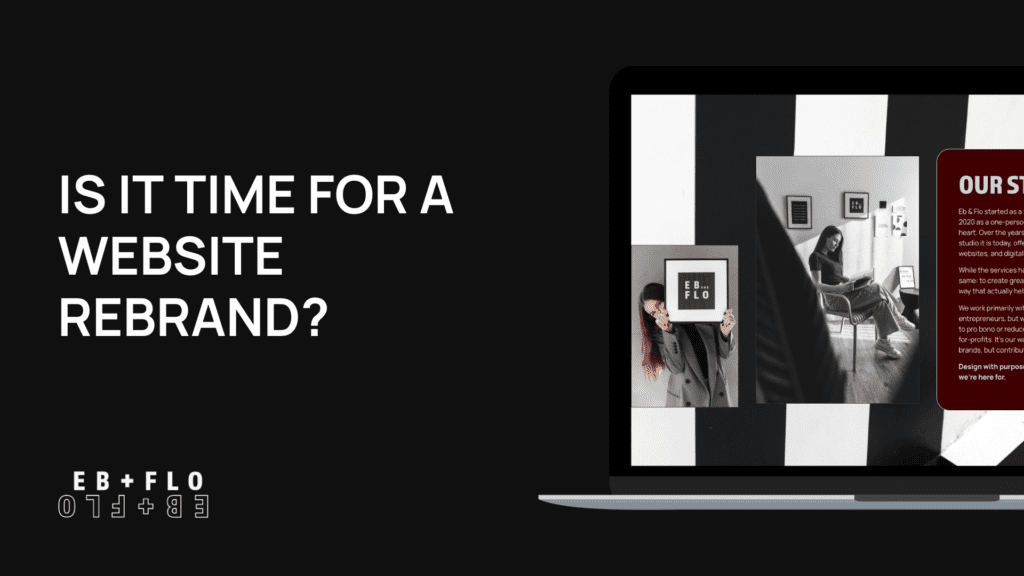
That’s usually the moment a website rebrand starts to make sense.
What a Website Rebrand Really Means
A website rebrand is not a cosmetic tidy up.
It’s not swapping out a few colours or choosing a trendier font. It’s stepping back and asking a bigger question. Does our online presence reflect who we are now and where we’re heading next?
A rebrand often means revisiting your positioning, refining your messaging, improving the way people move through your site, and creating a visual identity that feels aligned with your current level of growth. It can involve new structure, new strategy, new content, and often a full redesign and rebuild.
At its core, it’s about clarity and confidence. When your website matches the quality of your work, everything feels more cohesive.
The Subtle Signs You’ve Outgrown Your Website
Most businesses don’t wake up one morning and decide to rebrand for fun. It usually builds gradually.
You might notice your services have evolved, but your site still talks about what you offered years ago. Or your audience has shifted, yet your messaging still speaks to a different kind of client. Sometimes it’s simply a feeling that your business has matured but your website still feels like an early draft.
Design can be another giveaway. Digital trends move quickly, and while timeless design matters more than chasing trends, an outdated look can quietly chip away at credibility. Visitors make fast judgements. If your site feels behind, it can make your business feel behind too, even when your work is excellent.
There are also practical signals. Fewer enquiries than expected. Visitors dropping off quickly. People asking basic questions that your site should already answer. These moments often point to deeper issues with structure, messaging, or user experience.
And then there’s visibility. Older websites are often missing the SEO foundations that help you show up in search. Without clear keyword strategy, strong page structure, and intentional content, even great businesses can struggle to be found.
Rebrand vs Refresh: Knowing the Difference
Not every website needs a full rebrand. Sometimes a refresh is enough.
A refresh focuses on polishing what already exists. Visual tweaks, light layout adjustments, updated imagery, and small copy improvements can go a long way when the core strategy is still sound.
A rebrand goes deeper. It questions the foundations. It looks at how your business is positioned, how your services are presented, how users navigate your site, and how your brand is expressed visually and verbally. It often includes a messaging overhaul, UX improvements, SEO strategy, and a more intentional design system.
If your business has changed significantly, a refresh can feel like putting new paint on old walls. A rebrand rebuilds the structure so everything works better long term.
What a Strong Website Rebrand Can Unlock
When done well, a website rebrand becomes more than a design project. It becomes a growth tool.
It helps you present your work with confidence and authority. It makes it easier for the right clients to understand what you do and why it matters. It guides visitors naturally toward enquiries and bookings instead of leaving them to figure things out alone.
It can also support long term visibility. With stronger structure, clearer messaging, and intentional SEO foundations, your website becomes easier to find and easier to navigate.
Most importantly, it feels aligned. Your brand, your voice, your visuals, and your digital presence all tell the same story.
When Is the Right Time to Rebrand?
There’s no perfect timeline, but there are common turning points.
Rapid growth often creates a gap between where a business started and where it is now. Expanding services, new offers, a clearer niche, or a shift in direction can all signal it’s time to update your online presence.
Rebrands also make sense around major business changes like restructures, mergers, new leadership, or entering new markets. Sometimes it’s simply about readiness. You’ve refined your vision and you want your digital presence to match.
For many growing businesses, this happens every few years. The timing is less about the calendar and more about alignment.
Planning a Website Rebrand Thoughtfully
The most successful rebrands don’t start with colours or layouts. They start with clarity.
Clear goals. Clear audience. Clear positioning. From there, structure and user journeys can be mapped properly. Messaging becomes sharper. Visual direction becomes more intentional. Development becomes smoother because the strategy is solid.
Rushing straight into design without this groundwork often leads to frustration and another rebuild sooner than expected.
A thoughtful process takes more time upfront, but it creates a website that supports your business properly.
Your website is often your first conversation with a potential client. It should represent the business you are today, not the version you launched years ago.
If your growth isn’t reflected online, it might be time to realign your digital presence with your ambition.
Thinking about a website rebrand?
We design strategic, custom websites for growing businesses that have outgrown their early setup. If your brand feels ahead of your website, let’s plan what the next version should look like.