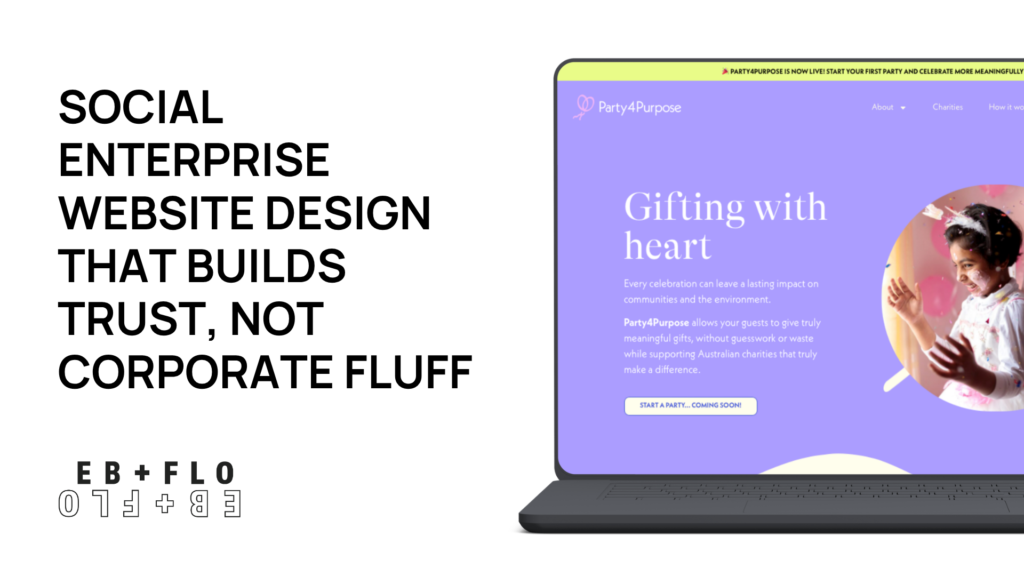
Designing a website for a social enterprise is very different to designing one for a standard corporate business.
Yes, the website still needs to look professional. It still needs strong UX, clear messaging and good SEO. But social enterprises also carry something else that many traditional businesses don’t. A mission.
And honestly, people can tell very quickly when that mission gets lost underneath overly polished branding and generic corporate language.
At Eb and Flo Digital Studio, we work with a lot of purpose-driven businesses, charities and community-focused organisations, and one thing we’ve noticed consistently is that the strongest social enterprise websites usually feel human first.
Not performative. Not overly corporate. Not trying too hard. Just clear, intentional and trustworthy.
Trust Is Everything For Social Enterprises
When somebody lands on a social enterprise website, they’re not only assessing the service or organisation itself.
They’re also subconsciously deciding:
- does this organisation feel genuine?
- do I trust them?
- do they feel credible?
- do they actually communicate impact clearly?
- does the experience feel accessible and human?
That balance matters. A website should feel professional enough to establish credibility while still feeling warm, approachable and connected to the organisation’s mission. That’s where many social enterprise websites struggle.
They either become:
- overly corporate and cold or
- visually chaotic and difficult to navigate.
The strongest websites usually sit somewhere in the middle.
Accessibility Should Never Feel Like An Afterthought
This is especially important for charities, mental health organisations, community groups and purpose-driven businesses.
Accessibility is not simply a “nice extra.” It’s part of good website design.
That includes things like:
- clear navigation
- readable typography
- mobile responsiveness
- strong contrast
- logical structure
- simple user journeys
- accessible forms
- clear calls to action
A lot of social enterprises serve broad and diverse communities. Your website should make it easier for people to engage with your organisation, not harder.
Social Enterprise Websites Need Clarity, Not Complexity
One of the biggest mistakes we see is organisations trying to communicate everything at once. Mission statements. Impact reports. Programs. Community initiatives. Fundraising. Partnerships. Events. All on the homepage. The result is usually overwhelming.
A strategic website should guide people naturally through information rather than throwing everything at them immediately. Good UX matters enormously here.
Visitors should be able to quickly understand:
- who you are
- what you do
- who you help
- why it matters
- how they can engage
Without needing to dig for it.
Storytelling Matters More Than Trendy Design
Social enterprises are often built on real stories, real people and real impact. That’s what people connect with. Not flashy animations. Not generic stock photography. Not overly polished corporate jargon.
The strongest purpose-driven websites usually feel grounded, clear and emotionally genuine. That doesn’t mean the website shouldn’t look modern. It absolutely should. But modern and human can exist together.
SEO Still Matters For Purpose-Driven Organisations
A lot of social enterprises underestimate how important SEO can be.
People are actively searching for:
- affordable support services
- ethical businesses
- community programs
- social impact organisations
- sustainable brands
- accessible healthcare
- local initiatives
A strategically structured website helps people actually find your organisation.
That means considering things like:
- keyword structure
- page hierarchy
- metadata
- accessibility
- internal linking
- mobile performance
- clear service pages
SEO is not just for massive corporations. It’s often incredibly important for community-focused organisations with limited marketing budgets.
Your Website Should Reflect The Way Your Organisation Actually Feels
One thing we care about a lot during social enterprise website projects is making sure the website genuinely reflects the organisation behind it.
That includes:
- tone of voice
- imagery
- accessibility
- structure
- storytelling
- emotional tone
- user experience
The website should feel aligned with the actual experience somebody has when engaging with your organisation. That consistency builds trust.
Good Social Enterprise Design Is About Connection
At the end of the day, people connect with organisations that feel genuine. That doesn’t mean a website needs to be perfect or overly polished. But it should feel thoughtful. Clear. Accessible. Easy to navigate. Aligned with the mission behind the organisation.
The best social enterprise websites build trust because they make people feel like there are real humans behind the brand. And honestly, that matters far more than chasing whatever design trend is popular this year.
A strong social enterprise website should do more than simply “look nice.”
It should communicate trust, clarity, impact and accessibility while still feeling human and aligned with the organisation behind it.
The best websites for charities and purpose-driven businesses are usually the ones that balance strategy with personality.
Not corporate fluff. Just thoughtful design that genuinely supports the people using it.
FAQ: Social Enterprise Website Design
What makes social enterprise website design different?
Social enterprise websites need to balance professionalism, trust, accessibility and storytelling while clearly communicating mission and impact.
Why is accessibility important for social enterprise websites?
Because many organisations serve broad and diverse communities. Accessible design helps ensure people can easily navigate and engage with the website.
Does SEO matter for social enterprises?
Absolutely. SEO helps people actually discover your organisation, services and programs online.
What should a social enterprise website include?
Clear messaging, accessible navigation, impact storytelling, mobile responsiveness, strong UX and clear calls to action.
Can a social enterprise website still feel modern without becoming corporate?
Definitely. Some of the strongest purpose-driven websites balance professionalism with warmth and personality rather than feeling overly polished or generic.